How to Brine Meats
Get Moist, Tender Meat Every Time
By Angela Harris
A basic brine consists simply of water and salt. Brining forces water into meats, causing them to be more juicy and tender. Don't brine foods for too long, or they will become too salty.
If you have never eaten any brined meat, you are in for a pleasant surprise. Brined meats are much more tender and moist than meats cooked the regular way. Meats can be brined before cooking, baking, even grilling or smoking.
What goes into a brine? Most brines are mostly composed of water and some salt and sugar. Kosher salt is preferred to regular salt. Different spices, herbs, and vegetables may be added.
What are the benefits to brining? Brining makes meats more moist and tender. Brining works by forcing additional water into the meat. The extra water is why the meats become more tender and moist. Any added spices and herbs are also forced deep into the muscles of the meat, resulting in deep, rich flavor.
Brining is great for making tender, juicy chickens or turkeys. If you brine a turkey at Thanksgiving, you will never make a roast turkey the old-fashioned way again. Leftover poultry that has been brined also stays moist. But brining is not just for poultry. Brining also works well with pork, especially pork roasts.
The basic recipe for a brine is 3/4 cup of kosher salt or pickling salt and 1/2 cup of sugar or brown sugar per gallon of water. (You may use regular salt if kosher or pickling salt is unavailable.) The sugar cuts down on the salty taste.
The rest is up to you. Try onions, cloves of garlic, and any other herbs or spices that you wish to add. You may also add other types of liquid to the brine, but avoid acidic liquids such as orange juice or vinegar.
To brine a whole turkey or chicken, completely cover the bird with the brining solution. Keep the whole turkey or chicken in the brining solution for about twelve hours. Whole turkeys should be kept in the brine for at least twelve hours, preferably overnight. Keep the brining solution and bird in the refrigerator, if possible. If not, keep the bird and brining solution covered with ice in a cooler. If neither of these are options and weather permits, keep the brine and turkey outside. Do this only if outdoor temperatures are going to stay below 40 degrees Fahrenheit.
Different types of foods require different brining times. Shrimp and other shellfish take only about thirty minutes. Whole chickens require about three hours per pound, up to twelve hours. Chicken pieces takes about one hour to brine. Whole turkeys should be left in the brine for about twenty-four hours. Pork chops take at least twelve hours to brine, up to twenty-four hours. Let whole pork loins brine for 2-4 days.
After brining, be sure to rinse the meat very well. Rinse at least two times, drying the meat well after each rinsing. Then season the meat as usual, but omit any salt.
If the meat ends up too salty, you brined the meat for too long, didn't rinse the meat well enough, or added too much salt or not enough sugar to the brine. You can counteract this by decreasing the salt slightly. Don't decrease the salt by too much, as salt is an essential ingredient for the brining process. You may also decrease the brining time, although this also will interfere with the brining process if the meat is removed from the brine too soon. A good way to remove much of the salty taste without losing the benefits of brining is to soak the meat for about an hour in regular water before proceeding to cook the meat.
Keep in mind that brined meats cook faster than meats that haven't been brined. Keep a close eye on the meat. Be sure the meat is done by using a meat thermometer. The internal temperature of poultry should be 170 degrees Fahrenheit.
2010 © Associated Content, All rights reserved.
Showing posts with label pork. Show all posts
Showing posts with label pork. Show all posts
Saturday, April 10, 2010


Friday, March 5, 2010
Pork Medallions with Creamy Caper Sauce

2 pork tenderloins (about 1 1/2 pounds total)
2 tablespoons butter or margarine
1/4 teaspoon salt
2/3 cup dry white wine
2/3 cup light cream
1 clove garlic, minced
1/8 teaspoon white pepper
2 tablespoons capers, drained
Cut each tenderloin crosswise into six 1-inch thick slices. With a meat mallet or cleaver, pound each slice to 1/2-inch thickness.
In a large skillet cook pork medallions in hot butter over medium heat about 3-4 minutes on each side. Remove pork to a warm platter; season with salt. Keep warm.
For the sauce, add wine to skillet drippings. Bring to boiling, scraping up any browned bits in skillet. Add cream, garlic and pepper. Cook and stir 3 minutes or until thickened.
Remove from heat, stir in capers. To serve, pour sauce over pork.
Calories 251 calories
Protein 26 grams
Fat 15 grams
Sodium 285 milligrams
Cholesterol 105 milligrams
Saturated Fat 8 grams
Carbohydrates 2 grams
Fiber 0 grams
Thursday, September 3, 2009
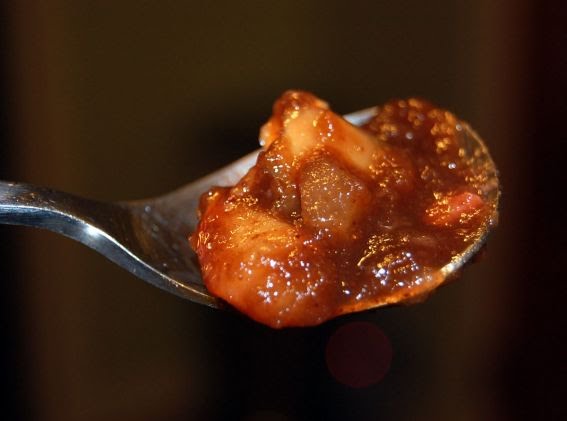
Apple Chutney
4 tablespoons butter
2 cups chopped tart apple
3 tablespoons light
brown sugar
2 tablespoons golden raisins
2 tablespoons dried cranberries
1/4 cup pecan pieces
1/2 teaspoon cinnamon
1/4 teaspoon nutmeg
1 teaspoon lemon juice
1/3 cup apple cider or juice
Heat butter in a medium saucepan; add apple, brown sugar, raisins, cranberries, pecans, spices, and juices. Cook over medium heat until apple is tender, dried fruits are softened, and cider has boiled away. If necessary, add a little more apple
cider to keep the mixture from scorching. Serve warm or chilled with ham or pork. Makes about 2 cups.
Monday, August 25, 2008
Pork Tenderloin with Orange and Rosemary Glaze
1/2 cup light corn syrup
1/3 cup frozen orange juice concentrate,
thawed
1 scant teaspoon dried rosemary, crumbled
1 tablespoon balsamic
vinegar
Salt and pepper, to taste
2 pork tenderloins, about 1 pound each
Salt and pepper
Combine corn syrup, orange juice concentrate, rosemary, and vinegar. Heat over medium-low heat until it comes to a simmer. Reduce heat to low and simmer for about 5 minutes. Remove from heat and add salt and pepper, to taste.Heat oven to 450°. Line a 9x13x2-inch baking pan with foil; brush with
olive oil.
Trim excess fat from pork tenderloins. Place the pork in the prepared baking dish. Place in the preheated oven and roast the pork for 15 minutes. Reduce the oven temperature to 350°. Put about 1/3 cup of the glaze in a dish to use for basting pork. Brush the pork all over and continue roasting for about 30 to 40 minutes longer, or until pork is cooked through. Brush with glaze every 10 minutes or so.
A meat thermometer should register about 160° when inserted in the thickest part of one of the pork tenderloins.
Slice tenderloins and serve drizzled with remaining glaze.
Serves 6.

Subscribe to:
Comments (Atom)
Subscribe To


 Posts
All Comments
Posts
All Comments